Welcome to The Amish Life
Simple, honest answers about how Amish families live, worship, cook and work, written by Saul Yoder.
Who are the Amish?
The Amish are Christian people who live simply, close to family, church and the land. Their faith began in Switzerland during the Reformation, and in 1693 they became their own church under a leader named Jakob Ammann. Today about 421,200 Amish live in North America, mostly in Pennsylvania, Ohio and Indiana.
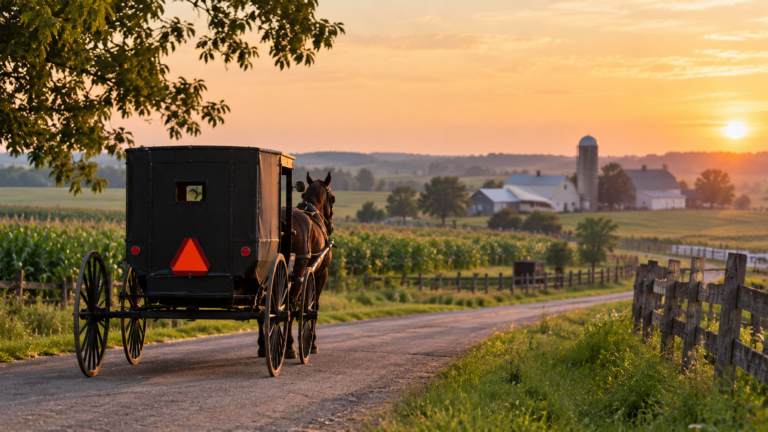
Most Amish families drive horse-and-buggies, stay off the public power grid, wear plain clothing and speak Pennsylvania Dutch at home. Children attend one-room schools through the eighth grade, and young people choose for themselves whether to be baptized and join the church. These choices aren’t about rejecting the modern world. They help keep families and neighbors close.
Every community is a little different, so on this blog Saul explains what is common, what varies, and why. Start with Amish Life 101, or see how the Amish differ from their closest cousins in Amish vs. Mennonite.
- 421,200 Amish in North America
- 33 U.S. states and 3 Canadian provinces
- 1693 the year the Amish church began
Population figures as of June 2026, from the Young Center for Anabaptist and Pietist Studies, Elizabethtown College.
Questions people ask most
- What’s the difference between Amish and Mennonites?
- Do the Amish use electricity?
- What do the Amish eat?
- Do the Amish pay taxes?
- What is Rumspringa?
- Can an outsider join the Amish?
Explore by topic
Daily Life & Homes
How an Amish home runs without the power grid.
Beliefs & Customs
Church, Rumspringa, baptism and mutual aid.
Food & Recipes
Everyday meals and Pennsylvania Dutch recipes.
Clothing
What Amish people wear, and why.
Quilts & Crafts
Quilt history, patterns and buying tips.
Visit Amish Country
Gentle itineraries and visitor etiquette.
Recent posts from Saul
New guides and stories, newest first.
- Amish vs Mennonite: What is The Real Difference | Explained
 Amish and Mennonites grew from the same Anabaptist roots in 16th-century Switzerland, yet today they draw very different lines on cars, electricity, dress and church life. Here is how to tell them apart, and what they still share.